How to Choose the Right Topper for Embroidery
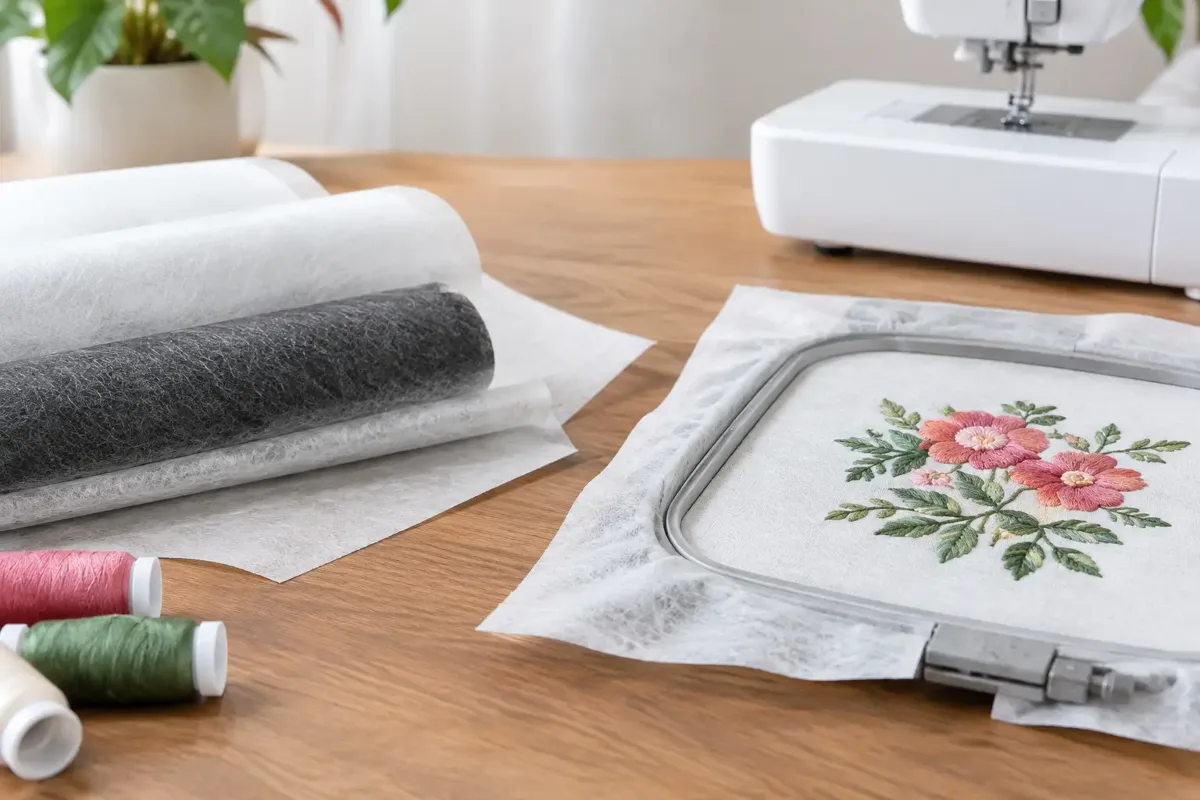
Lettering on jersey, an animal motif on towelling or a small logo on a polo shirt: however beautiful the embroidery file, the result soon suffers without the right preparation. When people search for an ‘embroidery topper’, they usually mean a thin, water-soluble film that sits on top of the fabric while you stitch. It holds down pile, loops and fibres so that the stitches stay clearly visible instead of sinking into the material.
On towels, brushed sweatshirt fabric, fleece or velour in particular, a topper makes a visible difference. It doesn't replace the stabiliser on the back – it's a useful addition to it. Used properly, it gives you clean outlines, legible letters and motifs that still look neat after washing.
What a topper does for your embroidery
A topper is also known as topping. It goes on the right side of the fabric, where the embroidered motif will be seen. Its job is simple: the needle first pierces a smooth surface, so the stitches can't push down between tall fibres or loops.
This is especially obvious with small details. Eyes, fine lines, names and narrow satin stitches often look uneven on towelling without a topper, or partly disappear into the pile. With a topper, the motif stays on top and looks much crisper. It can also help on felt, teddy plush or heavily textured knits.
After stitching, a water-soluble topper is carefully torn away or rinsed out with water. How easily it comes away depends on the material: some types tear cleanly along the edge of the stitching, while others only disappear completely once rinsed. For clothing, towels and washable accessories, the water-soluble version is usually the best choice.
Embroidery topper: when is it worth using?
Not every fabric needs a topper. On smooth woven fabric, poplin or sturdy canvas, the thread already sits neatly on the surface. With very small motifs, an extra layer can even be unnecessary, as bits of it can get stuck in tight gaps.
A topper is most useful on fabrics with texture, pile or a soft, giving surface. These include towelling, waffle piqué, fleece, teddy fabric, nicky velour, velour, plush and many brushed sweatshirt fabrics. On knitted hats or loose knits, too, a topper can help define the outlines. With stretchy fabrics, remember: the stabiliser on the back has to keep the fabric stable. A topper on its own won't stop it distorting.
A quick test is more helpful than any general rule. Place a small piece of topper on a fabric scrap and stitch a short name or a detail from the file you plan to use. That way you can see before starting the real project whether the stitches sit neatly and whether the design has the right density for the fabric.
The top and the back have different jobs
In machine embroidery, two types of stabiliser are often confused. The stabiliser on the back supports the fabric in the hoop. It stops the material from puckering, rippling or giving way under the strain of the stitches. Depending on the project, you'd use tear-away, cut-away or wash-away stabiliser here.
A topper, on the other hand, sits on top and smooths the visible surface. For a towelling towel, that often means a suitable stabiliser underneath for support and a water-soluble topper on top for a crisp motif. The two layers do different jobs and complement each other.
For a firm towel with a small motif, a tear-away stabiliser on the back is often enough. For stretchy fabrics such as jersey, interlock or thin sweatshirt fabric, a cut-away stabiliser is often the more reliable base, because it keeps supporting the stitches after embroidering. The right combination depends on fabric weight, stretch, motif size and stitch density.
How to use a topper neatly
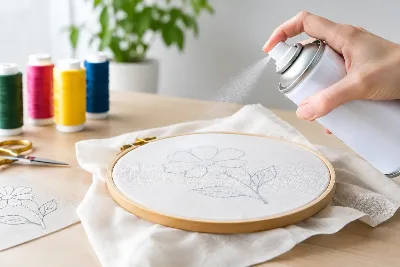
Cut your topper generously. It should cover the entire embroidery area and overlap a little on all sides, so it stays in place while you stitch. With very large hoops or a fabric that shifts about, a light mist of temporary spray adhesive can help. Use only a little, though, and test it on a scrap first so no residue is left on the fabric.
Hoop the fabric with the stabiliser on the back as smoothly as possible. The fabric can be taut but shouldn't be overstretched. Then lay the topper on top. Many embroidery machines hold it in place well enough with the first stitches. For a design with little underlay, it can be worth carefully securing the topper at the edges.
Stitch the motif as usual. After unhooping, remove the larger pieces of topper first, without tugging at the fabric. Small bits along the edges or inside letters can be loosened with a damp cotton bud, a soft brush or a gentle rinse. Then dry the project flat, or as recommended for the fabric, so the motif doesn't distort.
The right amount of water makes all the difference
A water-soluble topper is meant to dissolve, but not every project needs to be soaked through straight away. For a small motif on a cushion cover or T-shirt, it's often enough to dampen the remaining bits where needed. Towels and washable children's items can simply go through a normal wash after embroidering.
If small, stiff patches remain once dry, the topper usually hasn't been fully rinsed out. A second short soak will help. Don't leave the item in water longer than necessary, especially with delicate fabrics or colours. Always follow the care instructions for the base fabric.
Common mistakes and how to avoid them
If letters disappear into the fabric despite a topper, it isn't always the topper's fault. Often the embroidery file is too fine for the chosen fabric, or the stabiliser on the back is too weak. Small lettering needs sufficiently wide stitches and a stable base. A denser design can be easier to read on towelling than a delicate, very narrow font.
Another mistake is using too little topper. If it doesn't cover the whole embroidery area, parts of the motif can sink back into the pile. Tearing the topper off too roughly before rinsing is just as unhelpful, as it can pull on fine satin edges in particular. It's better to remove the large pieces and dissolve the small bits with water.
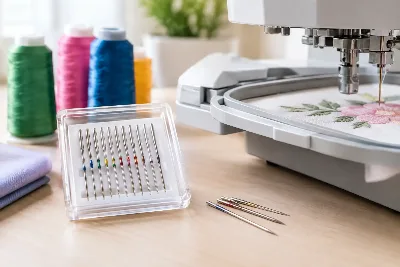
The needle deserves attention too. A blunt or damaged embroidery needle can pull out fibres and leave messy needle holes. For many everyday projects, a fresh embroidery needle in a suitable size is a good starting point. For very fine fabrics, metallic thread or special materials, other needle types may be better.
Choosing materials for lovely, hard-wearing results
For classic towelling towels and fluffy children's items, a thin water-soluble topper is usually an easy choice. It's simple to work with and disappears once rinsed. For particularly deep pile, the topper can be a little sturdier, as long as it's still easy to remove.
For projects that aren't meant to be washed, such as some decorative pieces, cards or framed embroidery, water-soluble material isn't always ideal. Here it's worth checking whether a topper that can be carefully torn away would suit better. It won't be invisible, but with suitable designs it can be removed cleanly.
At Die Stoffkönigin, alongside embroidery supplies, you'll also find fabrics for towels, children's clothing, bags and lots of other ideas. If you're unsure about the type of stabiliser, fabric combination or motif size, it pays to look at the project as a whole rather than at a single material. A great embroidery result comes from fabric, stabiliser, thread, needle and file that all work together.
Before your next embroidery project, take five minutes to stitch a test sample. With fluffy or stretchy fabrics especially, this little bit of preparation saves a lot of time – and turns a pretty motif into something you'll be proud to give as a gift or use every day.
Matching categories
Matching products
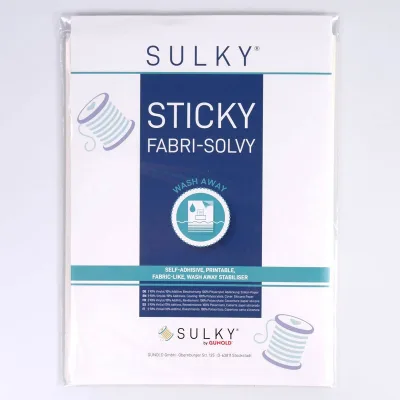
Sulky Sticky Fabri-Solvy 12 sheets 21.5 × 28 cm in White
€24.50per piece
Unit price €34.03 / m²
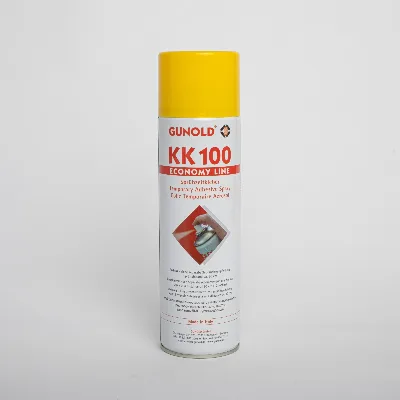
Gunold KK 100 Economy Temporary Spray Adhesive, 500 ml
€13.50per piece
Unit price €27.00 / l
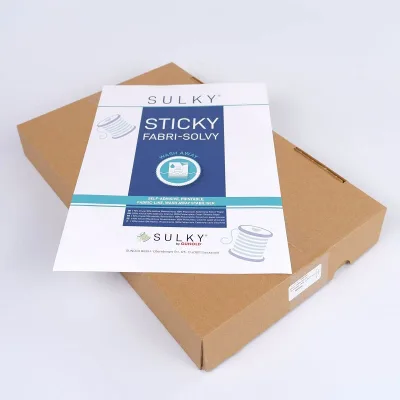
Sulky Sticky Fabri-Solvy 108 sheets 21.5 × 28 cm in White
€159.00per piece
Unit price €24.46 / m²
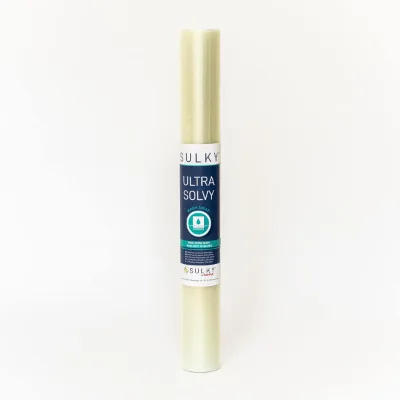
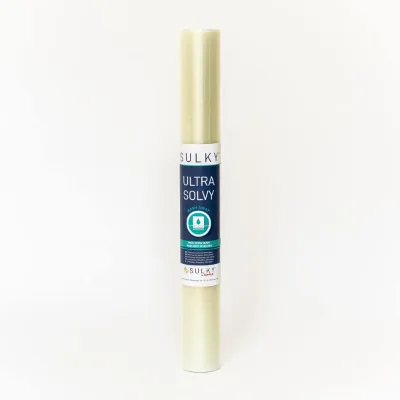
Sulky Ultra Solvy 50 cm × 25 m in Transparent
€63.00per piece
Unit price €5.04 / m²
Sulky Ultra Solvy 50 cm × 5 m in Transparent
€22.00per piece
Unit price €8.80 / m²
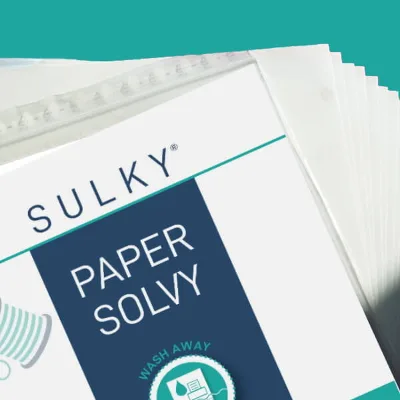
Sulky Paper Solvy Water-Soluble Paper, 12 sheets
€11.00per piece
Unit price €15.07 / m²