How to Choose the Right Left-Handed Dressmaking Shears
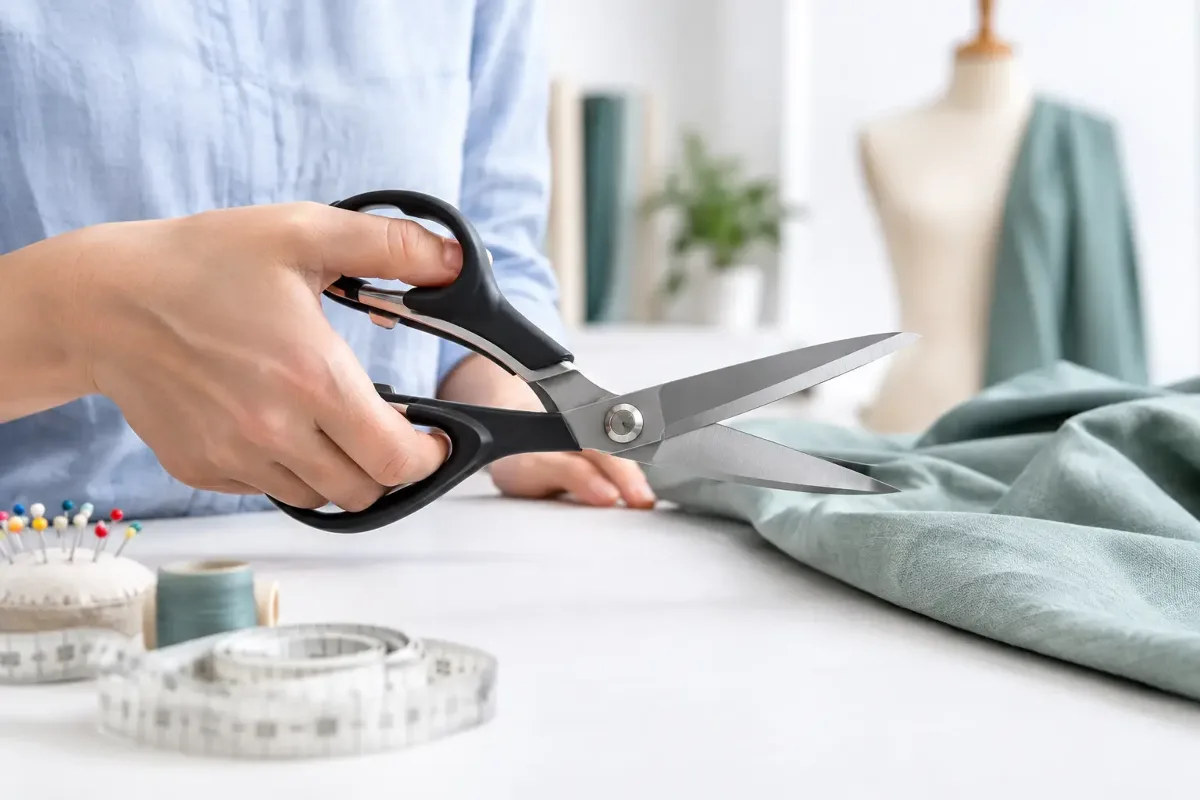
Left-handed dressmaking shears aren't just a small creature comfort – they're a tool that makes a real difference to your cutting. If you've ever cut fabric with right-handed scissors in your left hand, you'll know the problem: the cut edge tends to fray, the scissors dig uncomfortably into your fingers and the marked line disappears exactly where you need to see it. With the right pair of shears, you'll cut more comfortably, more accurately and with far more enjoyment.
Why left-handers need their own dressmaking shears
A good pair of fabric shears is about more than just a shaped handle. What really matters is how the blades are put together. On genuine left-handed shears, they're mounted as a mirror image of right-handed ones. This means the upper blade sits on the correct side as you cut, the cutting line stays visible and the pressure from your hand pushes the blades neatly together.
Right-handed scissors will work in your left hand in principle, but often only with effort and patience. The blades can easily be pushed apart as they close. Instead of a smooth cut, the fabric then tends to get trapped or torn. You'll notice this quickly with fine viscose wovens, stretchy jersey or several layers of cotton.
An ergonomic handle alone doesn't turn a pair of scissors into left-handed shears. Some models simply have larger or softer finger holes, but the blades are still arranged for right-handers. So always look for clear labelling as a left-handed model.
Left-handed dressmaking shears: what to look for
The best shears for you also depend on what you sew most often. For occasional projects such as a cushion, a drawstring bag or children's clothes, your shears can be handy and straightforward. If you regularly cut out garments or work with several layers of fabric, it's worth investing in a higher-quality model with longer, sharp blades.
Choose a blade length to suit your project
Dressmaking shears with an overall length of around 20 to 25 centimetres are a good all-rounder for many sewing projects. The longer blades let you cut straight stretches along hems, trouser legs or curtains in smooth strokes. This gives cleaner edges than lots of small, choppy cuts.
For tight curves, small appliqués or dolls' clothes, a shorter pair of scissors can be a useful extra. They're more manoeuvrable, but they won't replace large fabric shears when you're cutting out a sewing pattern piece. With larger pieces of fabric in particular, a long blade saves time and is kinder to your hand.
Comfortable in your hand, not just pretty in your sewing basket
Your shears need to fit your hand. If your thumb is squeezed in too tightly, you'll quickly get sore spots. If the finger hole is too big, you lose control as you cut. Models with ergonomically shaped, lightly rubberised handles are often comfortable to hold, especially when you're cutting for longer periods.
If possible, check whether the shears close fully without pressure. Your fingers shouldn't rub against each other, and your wrist should be able to stay straight. For small hands, a more compact model may be the better choice. Large hands, on the other hand, need enough room in the handle so the shears don't dig in with every cut.
Sharp blades protect your fabric
Fabric shears should cut, not tug. High-quality steel blades glide cleanly through woven fabric, jersey and many layers of cotton. With coated fabrics, softshell or raincoat fabric, a really sharp pair is especially pleasant to use, because otherwise the material can easily slip.
Very fine fabrics such as viscose, chiffon or lightweight cotton batiste also call for a precise blade. Don't lift the fabric as you cut – keep it as flat on the table as possible. That way your pattern pieces keep their shape and the edge comes out more even.
A fine micro-serration on one blade can be useful for slippery fabrics, as it grips the material a little better. For classic dressmaking fabrics, however, many sewists prefer smooth blades: they allow long, particularly clean cuts. There's no universal right or wrong here – what matters is the materials you like to use and how the shears feel as you work.
How to spot genuine left-handed shears
The product name is the first clue, but a quick practical test tells you even more. Hold the shears in your left hand, lay a piece of fabric flat and cut along a clearly drawn line. The line should stay easy to see without you having to twist your head or wrist.
Pay attention to four points:
- The blades close without any noticeable catching or being pushed sideways.
- The fabric is cut cleanly rather than trapped between the blades.
- You can follow the marking comfortably.
- The handle still feels comfortable after several cuts.
If you can hold the shears in your left hand but find yourself working against the blades, they probably aren't truly designed for left-handers. This usually shows quickly in a frayed edge or in having to use much more force than expected.
One pair for fabric – and a second for paper
Pattern paper, card, sticky tape and wrapping paper have no place under a good pair of dressmaking shears. Paper blunts the fine cutting edge, and adhesive residue can damage the blades too. After a few uses, you'll often notice the difference first with jersey: the shears no longer cut smoothly but push the fabric along in front of them.
It's best to give your fabric shears a dedicated spot in your sewing area and label them if necessary. A simple pair of paper scissors for patterns and small craft scissors for threads make sensible companions to your dressmaking shears. That way your most important cutting tool stays sharp for a long time.
Try to avoid touching pins with your shears as you cut, too. Remove them just ahead of the blade, or use pattern weights if lots of pins get in your way when cutting out. With large pattern pieces in jersey or sweatshirt fabric especially, this is a relaxed alternative.
Care: keeping your shears cutting precisely for years
After sewing, it's usually enough to wipe fabric fibres off the blades with a soft, dry cloth. Store your shears somewhere dry and protected – for example with a blade guard, or in a drawer where they won't knock against other metal items. Moisture can encourage rust, especially if the shears go unused for a long time.
If your shears become blunt despite good care, you don't have to replace them straight away. High-quality dressmaking shears can often be professionally sharpened. It's important that the special blade alignment of left-handed shears is taken into account. A random attempt at sharpening them at home is more likely to make the edge worse than better.
If your shears are stiff to open and close, a tiny drop of suitable oil on the pivot can help. Carefully wipe off any excess oil before the shears come into contact with light-coloured fabric again. Stains on a freshly cut-out favourite project would be rather annoying, after all.
When the investment really pays off
If you only mend the odd seam now and then, a solid beginner's pair is often enough. But if you regularly sew clothes, bags, patchwork projects or home furnishings, a good left-handed model quickly pays for itself. Your cutting becomes more accurate, your hand tires less, and even expensive fabric isn't wasted through messy edges.
This is especially true for sewing patterns with lots of pieces. With a dress, a jacket or a lined bag, you'll soon be dealing with numerous layers of fabric, interfacing and curves. Shears that reliably cut through the material don't just give better results – they also keep you enjoying the project.
At Die Stoffkönigin you'll find fabrics and matching sewing supplies for every project, all in one place. If you're torn between two sizes of shears or types of blade, let your most frequent project guide you – because the right left-handed dressmaking shears shouldn't sit in your sewing basket, but be the pair you're happy to pick up for every cut.
Matching categories
Matching products
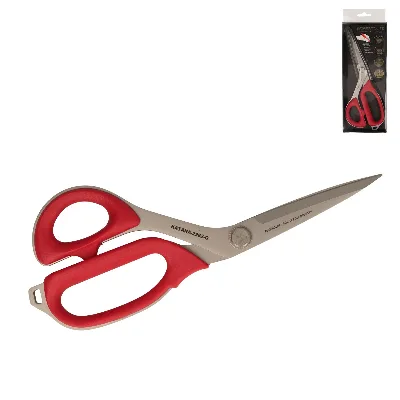
Dressmaking Shears 20 cm, left handed
€44.90per piece
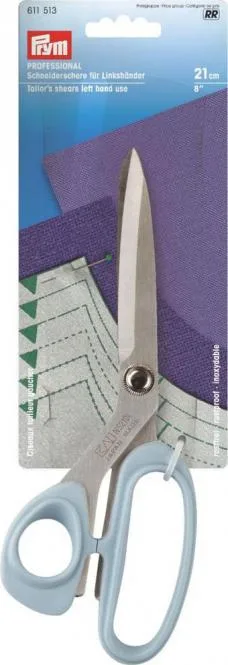
Prym Professional pair of scissors 21 cm in Grey
Sold out€32.50per piece
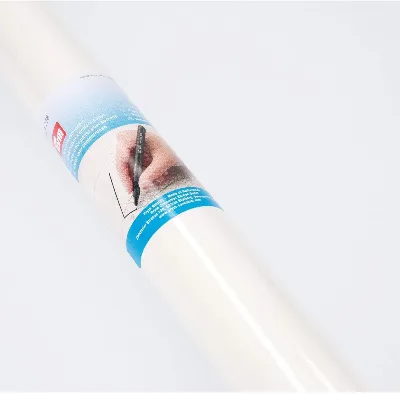
Prym pattern-making aid 1m x 10m in White
€9.30per piece
Unit price €0.93 / m
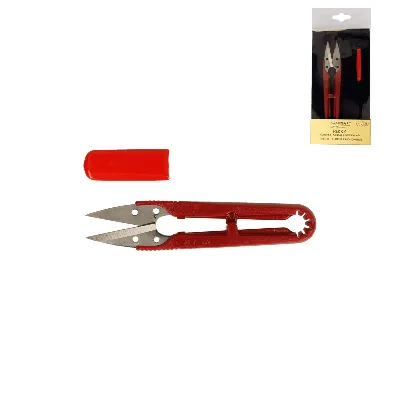
Thread Snips KATANA REKKA 1423
€4.90per piece