


This fabric comes in 12 colours
Cyan blue is a cool blue with a clear turquoise cast. It glows more than a classic blue and catches an eye at once on a pale ground. Its length is 70 cm. That is tooth length; the tape above it disappears into your seam allowance.
5 mm of coil width — the standard size for outerwear. It takes strain without reading as heavy as a metal fastener. Insert it with a zip foot so your seam runs close beside the teeth. Three to five millimetres is right: closer and the slider brushes it, further and the fabric throws a ripple.
What Teilbare Reißverschlüsse Cyanblau is suitable for
- Zipped hoodies, because the fastener can run up into the hood.
- Covers meant to come off entirely, because both halves separate.
- Rain jackets, because a separating fastener frees the whole front.
Sewing tips
- Länge am fertigen Schnittteil messen, nicht am Schnittmuster — Nahtzugaben und Saum verändern die gebrauchte Länge.
- Reißverschlussfuß verwenden. Mit ihm kommt die Naht dicht an die Zähne, ohne dass der Fuß aufläuft.
- Vor dem Annähen beide Seiten gleich hoch ausrichten und heften. Verschiebt sich eine Hälfte, steht die Jacke am Saum auseinander.
- Bei dehnbaren Stoffen den Beleg mit Vlieseline verstärken, sonst wellt sich die Kante entlang des Bandes.
- Den Schieber vor der Quernaht öffnen und beiseiteschieben, damit die Nadel nicht auf Metall trifft.
- Metall- und Krampenverschlüsse nicht bügeln. Bei Spiralverschlüssen nur mit Tuch und niedriger Stufe.
- Beim Waschen den Verschluss schließen, dann verzieht sich das Band nicht und die Zähne haken sich nicht in anderer Wäsche fest.
Available in more colours in the Teilbare Reißverschlüsse series.
Frequently asked questions
How do I thread it back together?
Slider all the way down, guide the pin straight into the box and push it in to the stop. Only then pull up. Entered at an angle, the pin jams and the slider jumps off again.
Which length does a jacket need?
Measure the front edge on your finished pattern piece, hem to neckline, and deduct seam allowances. Err short: too long and it stands proud at the top, too short and your hem gapes.
Does it work on sweat and jersey?
Yes, with strips of interfacing in the edge. Without reinforcement, knitted cloth stretches as you sew and the fastener pulls your finished jacket crooked.
Metal or plastic — which is better?
Plastic is lighter, more flexible and quieter; metal reads stronger and takes more strain. Sweat jackets do fine with plastic; for coats and workwear, metal serves better.
Care instructions:

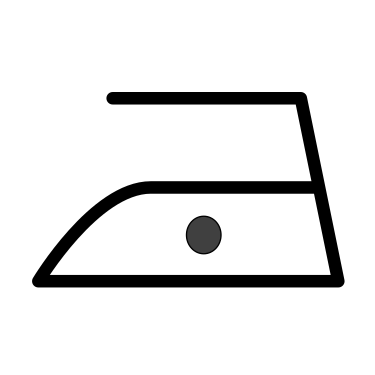


Daten und Pflege
- Colour code
- 208
- Width
- 5 mm
- Zip width
- 3 cm
- Length (cm)
- 70 cm
- End type
- teilbar
- Type
- Spirale
- Material
- 100 % Polyester
- Artikelnummer
- 503014493