

The tone Dark Yellow brings warmth into a project. On grey, denim and natural shades it reads as an especially clear contrast. 8 m of cotton per skein, 6 strands side by side: you decide while stitching how many go into your needle. A blunt embroidery needle finds the holes rather than the threads on counted fabric.
On counted fabrics like Aida you usually work with two or three strands; the fabric count decides, not taste. The skein is the handy amount: small enough to buy several tones, large enough for a whole design.
What Anchor Sticktwist Dunkelgelb is suitable for
- names on children's clothes
- tassels and charms
- freehand embroidery without a chart
Sewing tips
- Den Strang nicht auseinanderziehen, sondern das Fadenende vorsichtig herausziehen.
- Zum Teilen die gewünschte Anzahl Fäden einzeln herausziehen und wieder zusammenlegen.
- Fadenlänge etwa 40 bis 50 Zentimeter — längere Fäden verdrehen sich und fransen.
- Eine Sticknadel mit stumpfer Spitze nimmt bei Zählstoffen die Löcher statt der Fäden.
- Vor dem Waschen des fertigen Stücks eine Farbprobe machen, besonders bei kräftigen Rottönen.
Available in more colours in the Anchor Sticktwist series.
Frequently asked questions
How many strands do I stitch with?
That depends on your fabric. On coarse counted cloth people take three, on fine two, for solid areas all of them. A test stitch at the edge answers faster than any rule.
How long should the thread in my needle be?
Roughly a forearm's length. Longer threads twist while stitching, fray at the needle and end up looking different at the finish than at the start.
Can I machine embroider with it?
No. Stranded cotton is too thick and too soft for an embroidery machine, and its strands would separate in the needle eye. Machines take fine polyester thread; stranded cotton stays reserved for hand work.
Do I need an embroidery hoop?
For larger designs yes. A hoop keeps fabric evenly tensioned so stitches come out the same size. For a few centimetres of stitching the effort does not pay.
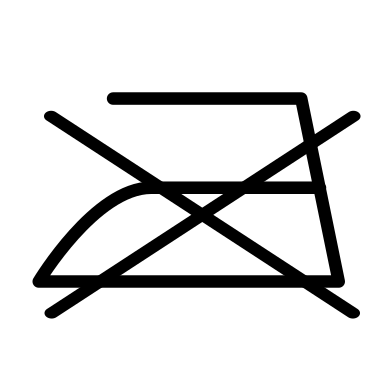
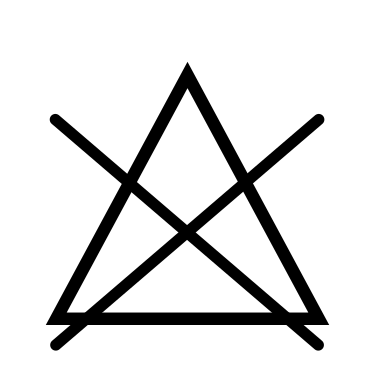
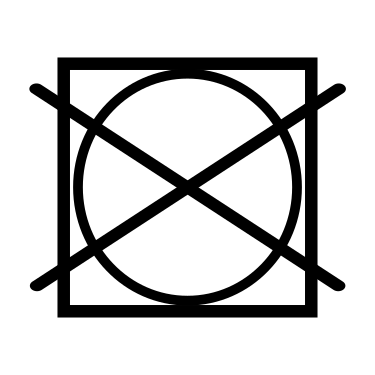
Care instructions: