

The tone Sage brings nature into a project. Beside wood, linen and earth shades it looks self-evident. 8 m of cotton per skein, 6 strands side by side: you decide while stitching how many go into your needle. A blunt embroidery needle finds the holes rather than the threads on counted fabric.
Repairs on knitwear are possible with it too, as long as the tone matches. Anchor makes stranded cotton in a wide palette you can add to over years. Part-used skeins are best kept in your box with their band.
What Anchor Sticktwist Salbei is suitable for
- monograms on linen and towels
- satin stitch and stem stitch designs
- visible-stitch repairs
Sewing tips
- Den Strang nicht auseinanderziehen, sondern das Fadenende vorsichtig herausziehen.
- Zum Teilen die gewünschte Anzahl Fäden einzeln herausziehen und wieder zusammenlegen.
- Fadenlänge etwa 40 bis 50 Zentimeter — längere Fäden verdrehen sich und fransen.
- Eine Sticknadel mit stumpfer Spitze nimmt bei Zählstoffen die Löcher statt der Fäden.
- Vor dem Waschen des fertigen Stücks eine Farbprobe machen, besonders bei kräftigen Rottönen.
Available in more colours in the Anchor Sticktwist series.
Frequently asked questions
How do I divide the thread?
Pull the number of strands you want out of the skein one at a time, then lay them side by side again. Pull several at once and you get knots instead of strands — the commonest beginner's mistake.
How long should the thread in my needle be?
Roughly a forearm's length. Longer threads twist while stitching, fray at the needle and end up looking different at the finish than at the start.
Why does it shine less than machine thread?
Because it is cotton rather than polyester. That matt character is intended: hand embroidery should read calm rather than shine like a machine-stitched surface.
Is the skein sold singly?
Yes, every skein on its own. That lets you buy exactly the tones a chart asks for instead of an assortment full of colours you never need.
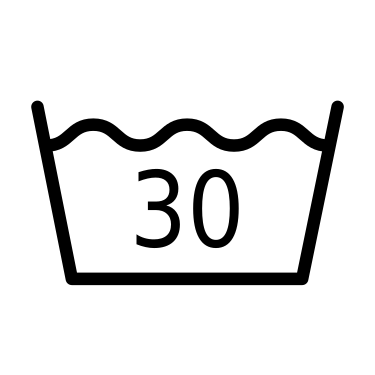
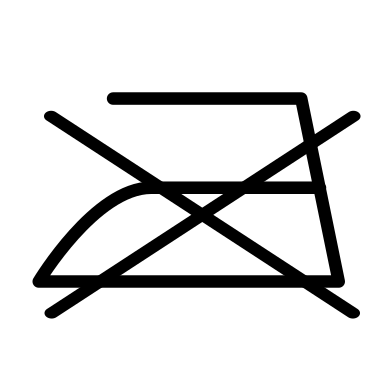
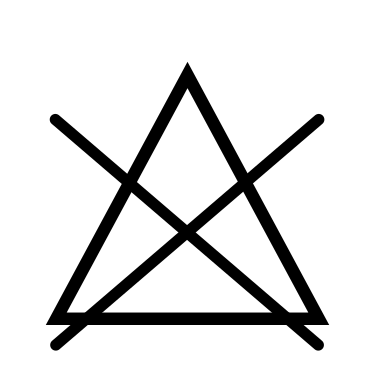
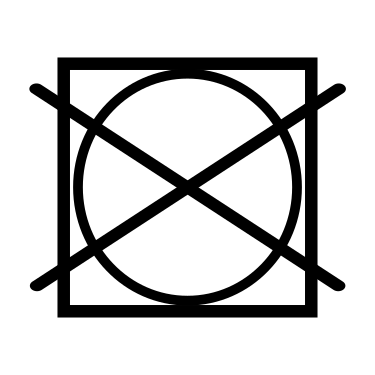
Care instructions: