

Soft and warm: Sand is the colour you pick on natural fabrics when your seam should merge with the cloth. The skein's 6 strands add up to 8 m of embroidery thread — enough for a medium design. The skein is sold singly.
On coarse weaves a thick line works better, on fine linen a thin one — match your strand count to the fabric. Stranded cotton belongs to the threads that have looked the same for generations. Stitch from an inherited chart and the tones are still there.
What Anchor Sticktwist Sand is suitable for
- cross stitch on Aida and counted fabric
- borders and decorative lines on linen
- visible-stitch repairs
Sewing tips
- Den Strang nicht auseinanderziehen, sondern das Fadenende vorsichtig herausziehen.
- Zum Teilen die gewünschte Anzahl Fäden einzeln herausziehen und wieder zusammenlegen.
- Fadenlänge etwa 40 bis 50 Zentimeter — längere Fäden verdrehen sich und fransen.
- Eine Sticknadel mit stumpfer Spitze nimmt bei Zählstoffen die Löcher statt der Fäden.
- Vor dem Waschen des fertigen Stücks eine Farbprobe machen, besonders bei kräftigen Rottönen.
Available in more colours in the Anchor Sticktwist series.
Frequently asked questions
How do I divide the thread?
Pull the number of strands you want out of the skein one at a time, then lay them side by side again. Pull several at once and you get knots instead of strands — the commonest beginner's mistake.
Which needle do I need?
For counted fabric a blunt embroidery needle: it finds the existing holes instead of splitting the weave. For smooth wovens take a sharp embroidery needle with a large eye.
Why does it shine less than machine thread?
Because it is cotton rather than polyester. That matt character is intended: hand embroidery should read calm rather than shine like a machine-stitched surface.
Does this thread suit children?
Yes, for learning to stitch cotton is the easiest pick: it does not slip, it is easy to hold and it forgives uneven stitches more readily than a smooth machine thread.
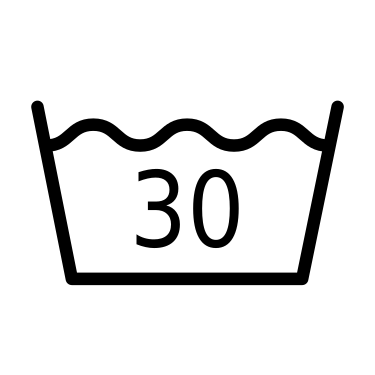
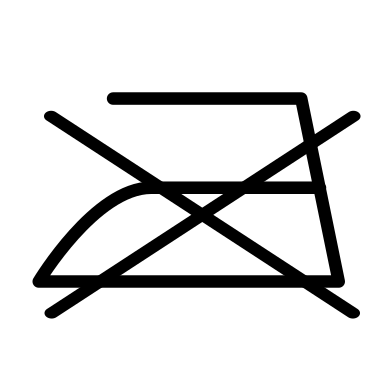
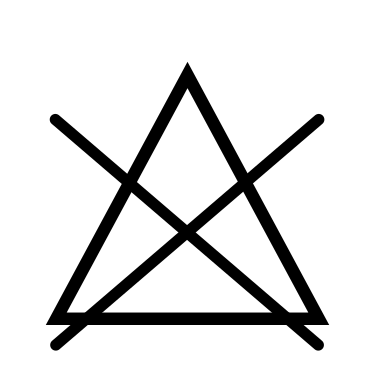
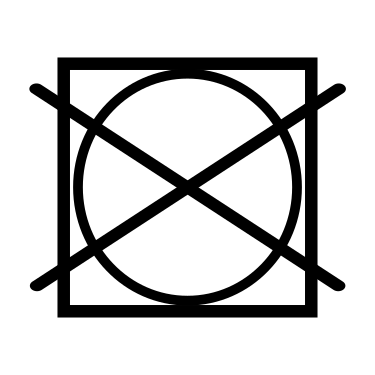
Care instructions: