


This fabric comes in 47 colours
- White 1801
- Cream 1949
- Sand 1666
- Dark Beige 1884
- Neon Sun 1883
- Lemon 1623
- Neon Lemon 1823
- Bright Yellow 1924
- Yellow Orange 1772
- Tangerine 1937
- Pumpkin 1763
- Mango 1678
- Neon Flame 1907
- Tomato Red 1821
- Bright Red 1837
- X-Mas Red 1839
- Dark Burgundy 1981
- Foxy Red 1637
- Rose 1816
- Dark Pink 1921
- Rouge 1919
- Neon Pink 1910
- Purple Pink 1880
- Mallow 1712
- Aqua 1645
- River Mist 1932
- Oxford Blue 1628
- Aquamarine Blue 1694
- Azure 1733
- Ocean Blue 1695
- Blue 1842
- Blueberry Blue 1975
- Navy 1967
- Dusty Mint 1900
- Mint 1702
- Light Green 1648
- Apple Green 1850
- Frog Green 1651
- Blue Green 1685
- Dark Olive 1796
- Forest Green 1703
- Caramel 1672
- Cognac 1657
- Chocolate Brown 1659
- Black Brown 1800
- Nickel 1687
- Slate 1618
Neon Lemon is not a tone for hiding. It belongs where things are meant to be seen. 400 m at weight 40, printed with colour code 1823 — that is how you find this tone again later. The polyester is dyed through, so this tone stays the same over many washes.
On dark fabrics the sheen comes fully into its own — a design then lifts away in the light as well as in colour. Polyneon shines without reading metallic. The shimmer stays soft and gives a design relief rather than glare.
What Madeira Polyneon Neon Lemon is suitable for
- designs on swimwear and workwear
- area fill stitches where the sheen pays off
- quilting stitches as a design element
Sewing tips
- Die Oberfadenspannung beim Sticken lockerer stellen als beim Nähen.
- Ein dünnes Untergarn als Unterfaden nehmen, nicht dasselbe Polyneon.
- Ein Fadennetz über der Spule verhindert, dass sich der Faden in Schlaufen legt.
- Nadelstärke 75 oder 80 mit Stickspitze reicht für die meisten Stoffe.
- Bei dichten Motiven langsamer sticken, sonst erhitzt der Faden und reißt.
- Die Farbnummer ist die Identität des Tons — sie gehört ins Projektheft.
Available in more colours in the Madeira Polyneon series.
Frequently asked questions
How do I set the thread tension?
While embroidering the top tension may sit looser than for sewing. It is right when the reverse shows roughly one third top thread and two thirds bobbin thread.
What do I do when the thread breaks?
Usually your machine runs too fast or the tension is too tight. Slow down, loosen the tension and check the thread path. A net over the spool keeps the feed calm.
Why does my design ripple?
Usually stitch density is too high or stabiliser is missing. Reduce density in your software, add suitable stabiliser and hoop the fabric taut but not stretched.
Does this thread shed lint?
Polyester sheds hardly any lint, unlike cotton thread. Even so, dust gathers in the hook area over time. Brushing it out monthly keeps your machine clean and stitching even.
Care instructions:
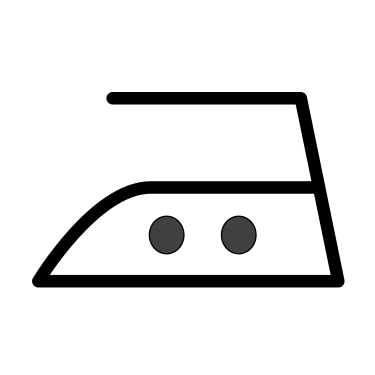
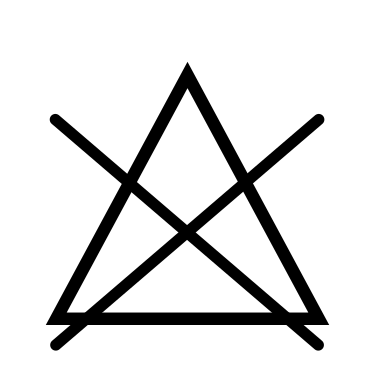

Daten und Pflege
- Length (m)
- 400 m
- Colour code
- 1823
- Material
- 100 % Polyethylene
- Artikelnummer
- 501022431